Healthcare News
2025 Nobel Prize in Medicine explained: regulatory T cells, the immune system's brakes
The 2025 Nobel Prize in Physiology or Medicine went to Mary E. Brunkow, Fred Ramsdell and Shimon Sakaguchi for discovering how regulatory T cells stop the immune system from attacking the body. Here is the science in plain English, and what it means for patients and healthcare practices.

Who won the 2025 Nobel Prize in Medicine?
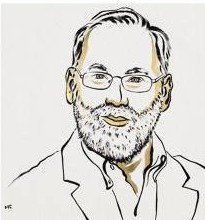
The 2025 Nobel Prize in Physiology or Medicine was awarded to Mary E. Brunkow, Fred Ramsdell and Shimon Sakaguchi "for their discoveries concerning peripheral immune tolerance". They discovered regulatory T cells, the immune system's "brakes", and the FOXP3 gene that controls them. The prize was announced by the Nobel Assembly at Karolinska Institutet on 6 October 2025.
| Laureates | Mary E. Brunkow, Fred Ramsdell, Shimon Sakaguchi |
|---|---|
| Announced | 6 October 2025, Nobel Assembly at Karolinska Institutet |
| Awarded for | Discoveries concerning peripheral immune tolerance |
| Key discoveries | Regulatory T cells (1995) and the FOXP3 gene (2001), linked in 2003 |
| Why it matters | Foundation for research into autoimmune disease, organ transplantation and cancer |
The three laureates
- Mary E. Brunkow, Institute for Systems Biology, Seattle, USA
- Fred Ramsdell, Sonoma Biotherapeutics, San Francisco, USA
- Shimon Sakaguchi, Osaka University, Japan
Together, they answered a question that had puzzled immunologists for decades: if the immune system is strong enough to destroy viruses and bacteria, what stops it from destroying us?
What is immune tolerance, and why does it matter?
The immune system has to recognise a huge range of invaders. To do that, it makes T cells with millions of different receptors. Some of those receptors will, by chance, react to the body's own tissues. When those cells are not controlled, the result can be an autoimmune disease.
Scientists already knew about central tolerance: in the thymus, many T cells that react strongly to the body's own proteins are removed before they enter the blood. But that filter is not perfect. Some self-reactive cells escape. The Nobel-winning work explains a second line of defence, called peripheral immune tolerance, that keeps those cells in check out in the body.
How regulatory T cells were discovered: a timeline
| Year | Discovery | Who |
|---|---|---|
| 1995 | A new class of T cells, carrying the marker CD25, protects mice from autoimmune disease | Shimon Sakaguchi |
| 2001 | A mutation in the gene Foxp3 explains the autoimmune "scurfy" mouse, and mutations in human FOXP3 cause IPEX syndrome | Mary Brunkow and Fred Ramsdell |
| 2003 | FOXP3 is shown to control the development and function of regulatory T cells | Sakaguchi and other research groups |
1995: Sakaguchi finds a new kind of T cell
At a time when many researchers doubted that "suppressor" cells existed, Shimon Sakaguchi showed that a group of T cells carrying a marker called CD25 protects mice from autoimmune disease. Without these cells, the mice developed autoimmune disease. They became known as regulatory T cells, or Tregs.
2001: Brunkow and Ramsdell find the FOXP3 gene
Mary Brunkow and Fred Ramsdell studied a strain of mice, known as scurfy mice, in which males developed a severe and fatal autoimmune disease. They traced the problem to a mutation in a gene they named Foxp3. They also showed that mutations in the human version of the gene cause IPEX syndrome, a rare and serious autoimmune disease that affects babies and young children.
2003: the pieces connect
Two years later, Sakaguchi and other research groups showed that FOXP3 controls the development and function of regulatory T cells. The cell he had found and the gene they had found were part of the same system. Without working FOXP3, the brakes fail.
Why regulatory T cells matter for autoimmune disease, transplants and cancer
- Autoimmune disease. Conditions such as type 1 diabetes, rheumatoid arthritis and multiple sclerosis involve the immune system attacking the body. Researchers are testing ways to boost or add regulatory T cells to restore balance.
- Organ transplantation. A transplanted organ looks foreign to the immune system. Treg-based approaches are being studied as a way to help the body accept a new organ, possibly with fewer immune-suppressing drugs.
- Cancer. Some tumours use regulatory T cells to hide from the immune system. Here, researchers are studying the opposite: ways to weaken the brakes so the immune system can attack the tumour.
The Nobel committee noted that the discoveries laid the foundation for a new field of research and spurred the development of new treatments, several of which are now in clinical trials.
Where Treg research stands today
A Nobel Prize recognises foundational science, not a finished treatment. Many Treg-based therapies are still being tested for safety and effectiveness, and promising results in trials can still fail later. Anyone living with an autoimmune condition should speak to their own doctor before drawing conclusions about new therapies, and should be careful with clinics that advertise unproven "immune" treatments.
What the 2025 Nobel Prize means for healthcare practices
Big science news reaches patients quickly, often through headlines that oversimplify. For clinics in rheumatology, endocrinology, dermatology and primary care, three practical points follow:
- Expect patient questions. Patients may ask whether "the Nobel treatment" is available. A short, accurate answer prepared in advance saves time at the front desk and in the consultation.
- Keep healthcare marketing accurate. Do not suggest your practice offers a therapy that is still in trials. In the US, the FTC requires health claims to be backed by competent and reliable scientific evidence. In the UK, the CAP Code and the ASA apply similar rules. In Germany, the Heilmittelwerbegesetz restricts how medical treatments can be advertised.
- Educate, do not promise. Helpful, accurate content about new research builds trust and supports your practice's visibility in search. Content that promises results damages trust and can break advertising rules.
If you want your practice's marketing to stay accurate and compliant while bringing in more patients, see how GritSol Health works or read why healthcare marketing is still so manual in 2026.
Frequently asked questions
Who won the 2025 Nobel Prize in Physiology or Medicine?
Mary E. Brunkow, Fred Ramsdell and Shimon Sakaguchi won the 2025 Nobel Prize in Physiology or Medicine for their discoveries concerning peripheral immune tolerance.
What did the 2025 Nobel Prize in Medicine recognise?
It recognised the discovery of regulatory T cells and the FOXP3 gene that controls them. Together they explain peripheral immune tolerance: how the immune system avoids attacking the body's own tissues.
What are regulatory T cells?
Regulatory T cells (Tregs) are white blood cells that calm other immune cells down. They act like brakes, so the immune system can fight germs without damaging healthy tissue.
What is FOXP3?
FOXP3 is a gene that controls how regulatory T cells develop and work. Faulty FOXP3 causes IPEX syndrome, a rare and serious autoimmune disease in children.
What is peripheral immune tolerance?
Peripheral immune tolerance is the body's second safety system against autoimmunity. It keeps self-reactive immune cells in check after they leave the thymus, mainly through regulatory T cells.
Are there approved treatments based on regulatory T cells?
Several Treg-based approaches for autoimmune disease, organ transplantation and cancer are being tested in clinical trials. Patients should ask their own doctor about what is available to them.
This article is general information about a scientific prize. It is not medical advice and was not written by a doctor. For questions about your health, speak to a qualified healthcare professional.
Sources
See where your practice is losing patients
Our free 30-minute growth audit reviews your ads, tracking, landing pages, follow-up and compliance, and shows you what to fix first. No obligation.
Get Your Free Growth AuditRelated articles
 Healthcare Marketing
Healthcare marketing automation in 2026: why most clinics are still manual, and how to fix it
Why clinics still run patient acquisition by hand, what to automate first, and how to stay HIPAA and GDPR compliant.